

Rediscover Confidence. Restore Your Natural Look.
At Noor Dermatology & Aesthetics, we combine world-class dermatologic expertise with advanced aesthetic artistry to restore your hair with results that look and feel completely natural. Our hair transplant procedures are performed in a luxurious, private setting where comfort, precision, and care come first.
We offer both Follicular Unit Extraction (FUE) and Follicular Unit Transplantation (FUT) — two of the most refined and effective hair restoration techniques available. Each approach is tailored to your unique goals, hair type, and lifestyle for results that seamlessly complement your natural features.
Follicular Unit Extraction (FUE)
Precision. Subtlety. Innovation.
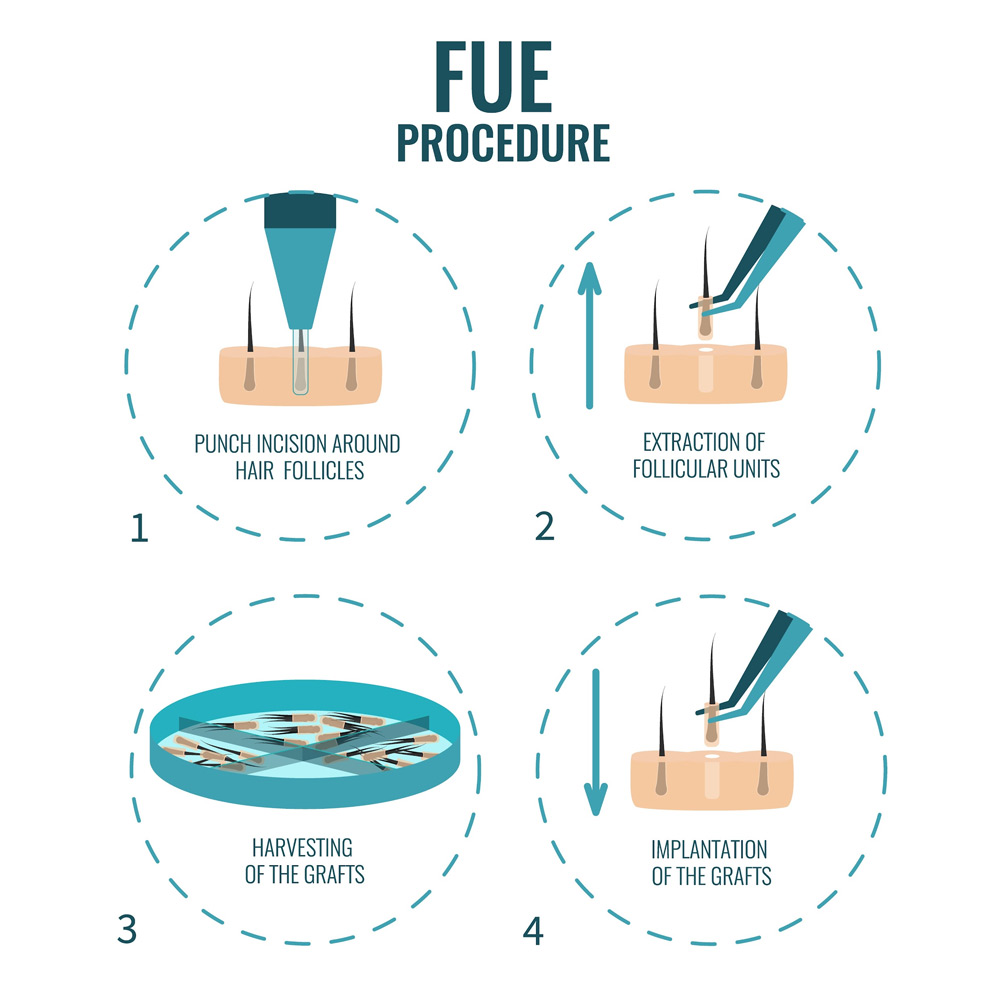
The FUE technique is a minimally invasive procedure that uses advanced micro-extraction tools to individually harvest healthy hair follicles from the donor area (typically the back or sides of the scalp). These follicles are then meticulously transplanted into thinning areas to recreate natural growth patterns and density.
What to Expect:
- Local anesthesia for optimal comfort
- Individual follicle extraction — no stitches, no linear scar
- Meticulous placement for natural coverage and flow
- Quick recovery with minimal downtime
Ideal For:
Patients who prefer shorter hairstyles, wish to avoid visible scarring, or desire a faster recovery period.
Follicular Unit Transplantation (FUT)
Volume. Coverage. Timeless Results.
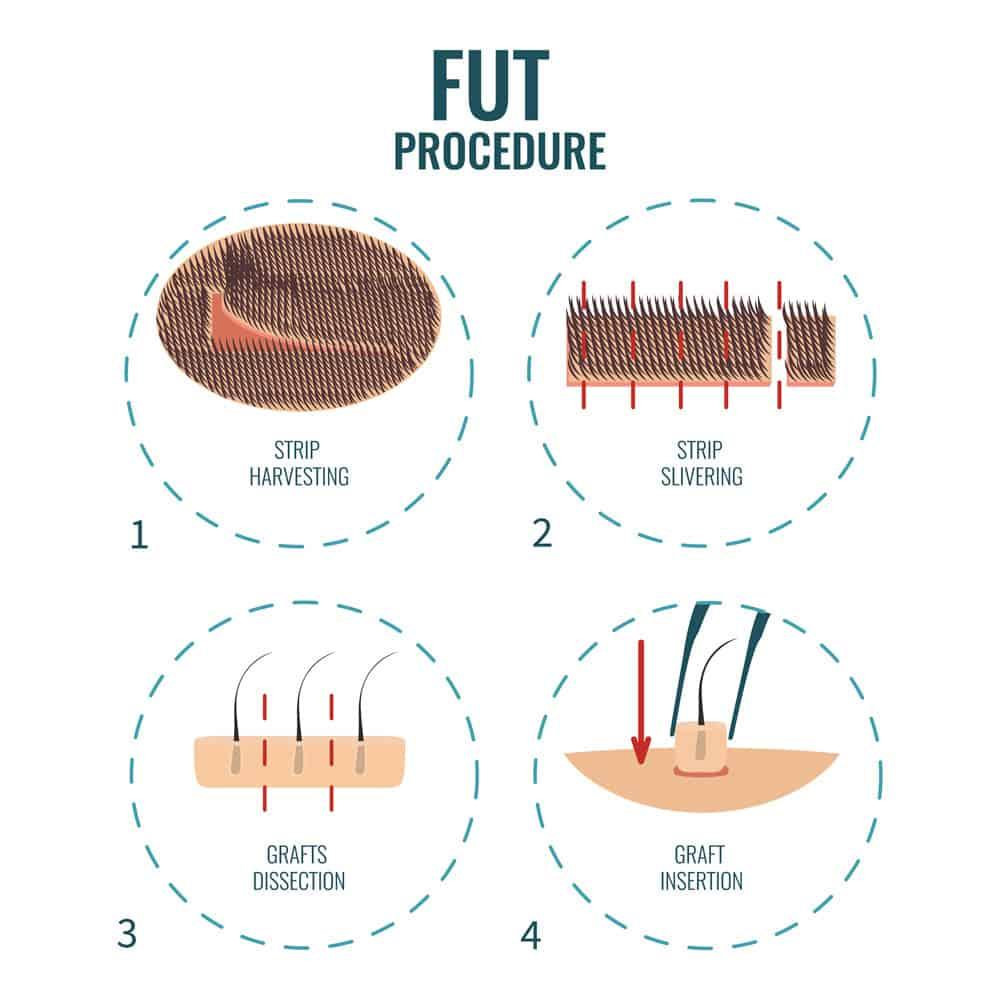
The FUT method involves removing a narrow strip of scalp from the donor area, from which individual follicular units are carefully separated under a microscope and implanted into thinning areas. This approach allows for a greater number of grafts in a single session, ideal for patients seeking more extensive coverage.
What to Expect:
- Local anesthesia and a comfortable experience
- A fine, linear donor incision closed with precision for minimal visibility
- High graft yield for greater density and fullness
Ideal For:
Patients experiencing advanced hair loss or seeking a fuller, more comprehensive restoration.
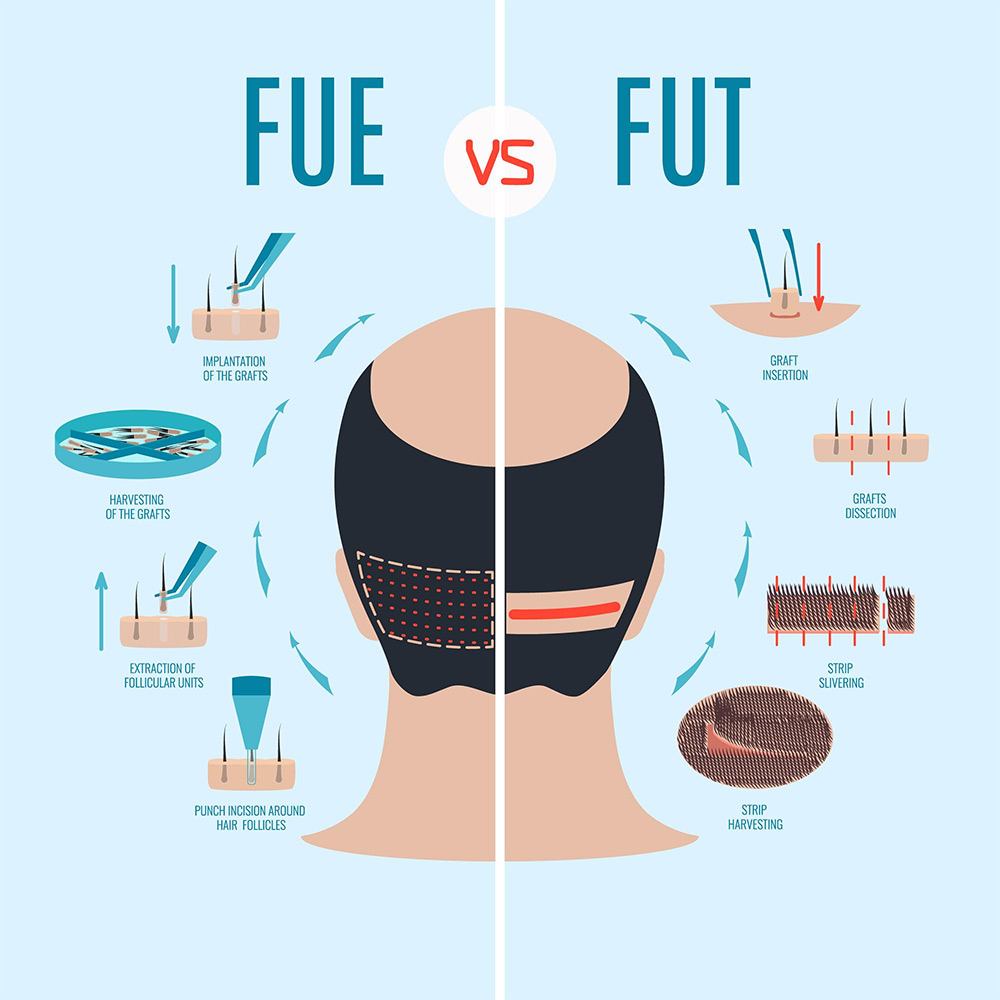
FUE vs. FUT: Understanding the Difference
FUE | FUT | |
Technique | Individual follicle extraction | Donor strip harvest |
Scarring | No linear scar | Fine linear scar, easily concealed |
Healing Time | Faster recovery | Slightly longer recovery |
Graft Volume | Moderate | Higher per session |
Best For | Subtle restoration or short hairstyles | Extensive restoration and fuller coverage |
Are You a Candidate for Hair Restoration?
You may be an excellent candidate for hair transplantation at Noor Dermatology & Aesthetics if you:
- Have stable hair loss (pattern has plateaued)
- Possess adequate donor hair on the back or sides of the scalp
- Are in good general health
- Desire a permanent, natural-looking solution
- Have realistic expectations regarding coverage and results
During your private consultation, our board-certified dermatologist will evaluate your scalp, donor availability, and goals to create a personalized plan — whether FUE, FUT, or a combination approach — designed to achieve natural, enduring results.
Frequently Asked Questions
How long does a hair transplant take?
Depending on the number of grafts, most procedures take between 4–8 hours. FUE sessions may take slightly longer since each follicle is extracted individually.
Is there downtime after the procedure?
Downtime is minimal. Most patients return to daily activities within 2–3 days. With FUT, recovery may take a bit longer due to the donor area healing.
When will I see results?
You can expect initial hair growth around 3–4 months after your procedure, with fuller, more visible results developing between 8–12 months.
Will my results look natural?
Yes. Our dermatologists specialize in creating hairlines and density patterns that match your natural growth and facial symmetry.
Is the procedure painful?
Discomfort is minimal. The procedure is performed under local anesthesia, and most patients describe the experience as comfortable and stress-free.
How an FUT Hair Transplant Typically Proceeds
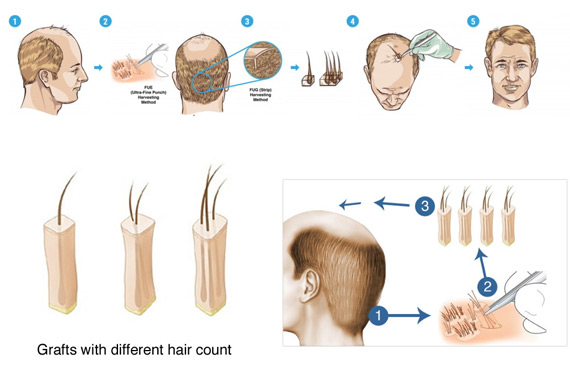
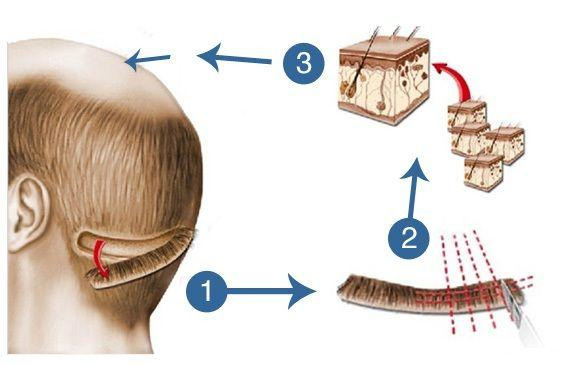
FUT, also called the “strip method,” involves removing a thin strip of hair-bearing scalp from the back of the head and transplanting the individual hair follicles into thinning or bald areas. Here’s what patients can expect:
Step 1: Consultation and Planning
- Your surgeon evaluates your hair loss pattern, donor hair density, and scalp characteristics.
- A customized hairline is designed, and the number of grafts needed is estimated.
- This step ensures your results look natural and meet your goals.
Step 2: Preparation and Local Anaesthesia
- The donor area (back of the scalp) is trimmed short.
- Local anesthesia is administered to both the donor and recipient areas, so the procedure is pain-free.
- Sedation may be offered in some clinics for extra comfort.
Step 3: Donor Strip Removal
- A narrow strip of scalp (usually 1–1.5 cm wide) is carefully removed from the back of the head.
- This strip contains many naturally grouped hair follicles.
- The donor area is temporarily closed with sutures.
Step 4: Donor Area Closure
- The wound is stitched using a technique called trichophytic closure, which allows hair to grow through the scar.
- This helps the scar become thin and less visible once the hair grows back.
Step 5: Graft Dissection
- Under a microscope, technicians divide the strip into individual follicular units, each containing 1–4 hairs.
- This step is critical for ensuring that the transplanted hairs survive and grow naturally.
Step 6: Recipient Site Creation
- Tiny incisions or “slits” are made in the balding areas.
- The angle, depth, and direction of these slits are carefully designed to mimic natural hair growth patterns.
Step 7: Graft Placement
- Each follicular unit is delicately inserted into the prepared recipient sites.
- Single-hair grafts are used along the frontal hairline for a soft, natural appearance, while multi-hair grafts are placed behind for density.
Step 8: Post-Procedure Care
- The donor area is lightly bandaged for 24–48 hours.
- Patients receive instructions for washing, medication, and activity restrictions.
- Mild soreness or swelling is normal and resolves within a few days.
Pros:
- Large graft sessions: Can transplant a higher number of hairs in a single procedure.
- Strong graft survival: Follicles are carefully dissected under a microscope.
- Cost-effective: Typically lower cost per graft compared to FUE.
- Natural density: Excellent for covering extensive balding areas.
Cons:
- Linear scar: Leaves a thin scar at the donor site (usually hidden under hair).
- Longer recovery: Donor area needs 10–14 days to heal.
- Tightness in donor area: Some patients feel scalp tightness for a few days after surgery.
- Limited hairstyle options: Short hairstyles may reveal the scar.
FUT (“Strip Method”) Timeline
Timeframe | What Happens | Tips & Notes |
Day 0 (Procedure Day) | Surgery completed under local anesthesia. Donor strip is sutured. Mild soreness and swelling may occur. | Rest, avoid touching or scratching the scalp. Pain is manageable with prescribed medication. |
Days 1–3 | Mild discomfort at donor site, slight redness or swelling on forehead possible. | Use cold compresses to reduce swelling; sleep with head elevated. |
Days 4–7 | Small scabs form at recipient sites; donor area may feel tight. | Avoid strenuous activity; wash scalp gently following instructions. |
Days 7–10 | Sutures removed (if non-dissolvable). Most scabs naturally fall off. | Avoid scratching; your scalp may still feel tender. |
Weeks 2–4 | Shedding phase: transplanted hairs may fall out. This is normal and temporary. | Don’t panic — the follicles are intact beneath the skin and will regrow. |
Months 3–4 | Early hair growth begins; fine new hairs start to appear. | Hair may be thin initially; patience is key. |
Months 6–9 | Hair density increases; coverage becomes noticeable. | Styling and trimming can begin as comfort allows. |
12 Months | Full growth, natural thickness, and hairline achieved. | Final results visible; hair continues to strengthen. |
Beyond 12 Months | Hair is permanent and continues to grow like normal hair. | Consider maintenance treatments if needed; consult your surgeon for future planning. |
How an FUE Hair Transplant Typically Proceeds
FUE, also called the “no-strip” or “no-linear-scar” method, involves extracting individual hair follicles from the donor area and implanting them into thinning or bald areas. It’s minimally invasive and allows faster recovery.
Step 1: Consultation and Hairline Design
- Your surgeon evaluates your hair loss pattern, donor hair quality, and scalp laxity.
- A custom hairline is designed, and the number of grafts needed is estimated.
- This ensures your results look natural and balanced with your facial features.
Step 2: Preparation and Local Anaesthesia
- Donor area (usually the back and sides of the scalp) is trimmed short.
- Local anesthesia is applied to both donor and recipient areas to keep the procedure pain-free.
- Sedation may be offered in some clinics for extra comfort.
Step 3: Follicular Unit Extraction
- Using a micro-punch device (0.7–1.0 mm), individual follicular units are carefully removed from the donor area.
- Each extraction leaves a tiny circular wound that heals quickly, leaving minimal dot-like scars.
- Follicles are carefully preserved in a special solution to maintain viability.
Step 4: Recipient Site Creation
- Tiny incisions or “slits” are made in the thinning or bald areas.
- The surgeon pays close attention to angle, direction, and density to ensure a natural appearance.
Step 5: Graft Implantation
- Each follicular unit is carefully inserted into the prepared sites.
- Single-hair grafts are used along the frontal hairline for a natural look; multi-hair grafts are used behind for density.
- The process is meticulous to ensure even spacing and natural flow.
Step 6: Post-Procedure Care
- Donor area heals quickly; tiny scabs fall off within a few days.
- Patients receive instructions for gentle washing, activity restrictions, and medications.
- Mild redness, swelling, or soreness is normal and typically resolves in a few days.
Pros:
- Minimal scarring: Tiny dot scars that are usually invisible, even with short haircuts.
- Faster recovery: Donor area heals in 3–5 days.
- Flexible hairstyles: Ideal for patients who like short hair or want less visible scarring.
- Less post-op tightness: No sutures, so the scalp feels more comfortable immediately after surgery.
Cons:
- Longer procedure for large sessions: Extracting individual follicles takes more time.
- Slightly higher cost per graft compared to FUT.
- Limited graft count per session: Large coverage may require multiple sessions.
- Careful handling required: Individual grafts are more delicate, requiring expert technique for best survival.
FUE (“No-Scar Method”) Timeline
Timeframe | What Happens | Tips & Notes |
Day 0 (Procedure Day) | Individual follicular units extracted and implanted. Minimal soreness. | Local anesthesia keeps you comfortable. Donor area may have tiny red dots. |
Days 1–3 | Donor area heals rapidly; tiny scabs at recipient sites begin forming. | Gentle washing recommended; avoid sun exposure. |
Days 4–7 | Scabs at implantation sites fall off naturally. Mild redness may remain. | Avoid picking at scabs; small dot scars in donor area fade quickly. |
Weeks 2–4 | Shedding phase: newly transplanted hairs may fall out. | Normal; follicles remain in place and will regrow. |
Months 3–4 | First signs of regrowth; fine hairs appear in recipient areas. | Hair may be soft and thin initially. |
Months 6–9 | Hair thickens and density improves. Natural coverage noticeable. | Regular hair care resumes; gentle trimming okay. |
12 Months | Full growth, natural thickness, and restored hairline. | Results are permanent; styling options unrestricted. |
Beyond 12 Months | Hair continues to mature and strengthen. | Permanent results; future enhancements possible if desired. |